
“This put up accommodates affiliate hyperlinks, and I can be compensated if you happen to make a purchase order after clicking on my hyperlinks.”
At DogingtonPost, we’re dedicated to bringing you the newest African wild canine information. These endangered canines face quite a few challenges within the wild, from habitat loss to human battle.
Conservation efforts are ongoing, however the combat to guard these distinctive animals is much from over. On this put up, we’ll discover the present standing of African wild canine populations and the progressive methods getting used to make sure their survival.
African Wild Canine Inhabitants Standing
Present Numbers and Distribution
African wild dogs, also known as painted wolves, face a critical situation across Africa. Traditionally destroyed as “downside animals” due to conflicts with livestock, their populations have lengthy been declining. This emphasizes the necessity for rapid conservation motion.
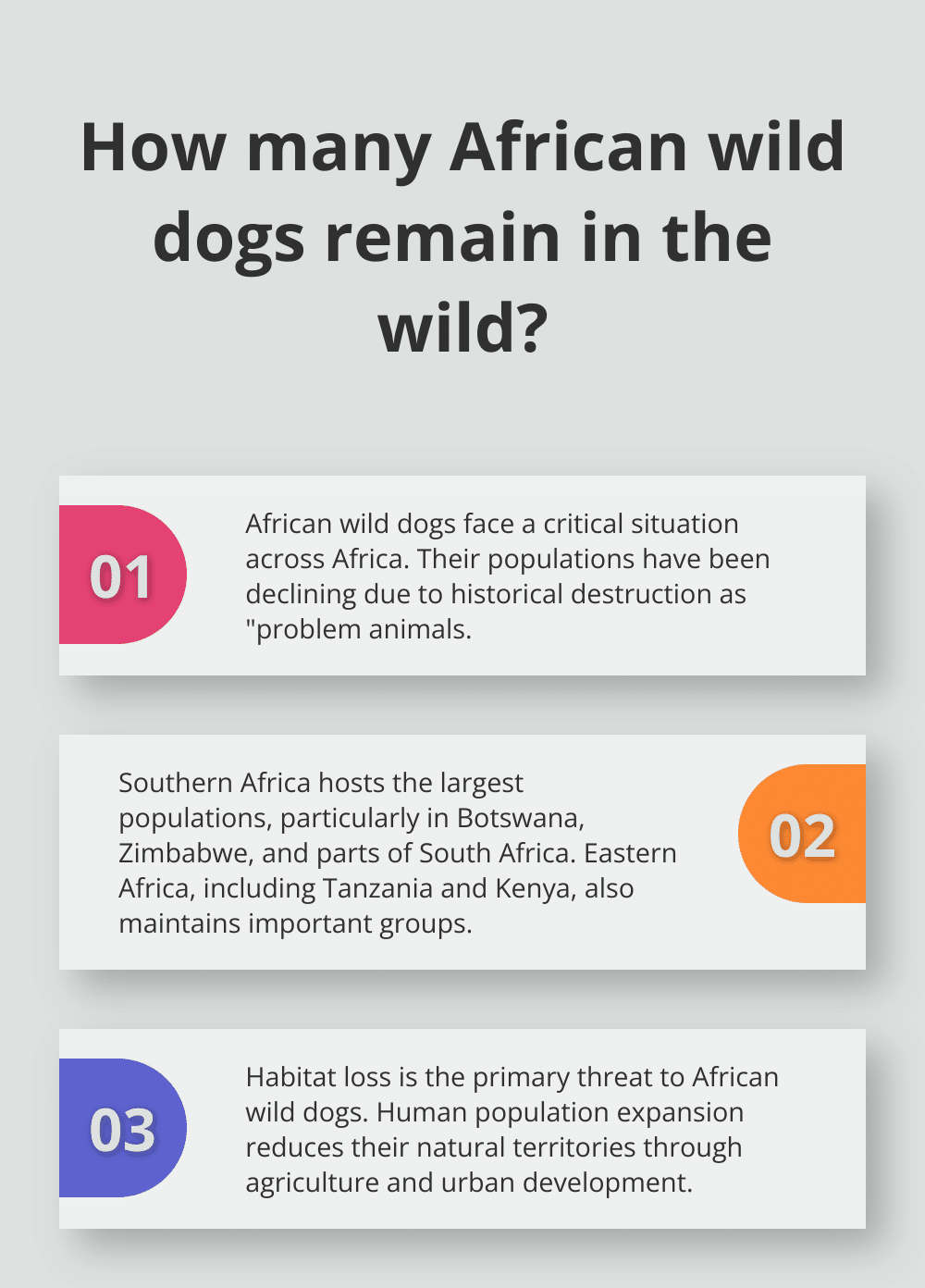
The distribution of African wild canine spans fragmented areas throughout sub-Saharan Africa. Southern Africa (notably Botswana, Zimbabwe, and elements of South Africa) hosts the most important populations. Japanese Africa, together with Tanzania and Kenya, additionally maintains necessary teams. Nevertheless, West and Central Africa have skilled a dramatic inhabitants plummet, with solely small, remoted teams remaining.
Main Threats to Survival
Habitat loss stands as the first risk to African wild canine. Human inhabitants enlargement reduces their pure territories by means of agriculture and concrete improvement. This loss not solely shrinks their looking grounds but additionally will increase conflicts with people and livestock.
Snaring poses another significant danger. Snares will not be as efficient at killing as they’re at catching animals. Usually, they inflict brutal and horrific accidents that imply agonizing, never-ending ache for the animals caught in them.
Current Inhabitants Tendencies
Regardless of the general decline, some areas present indicators of hope. In sure protected areas, wild canine populations have elevated. For instance, Kruger Nationwide Park in South Africa has witnessed a gradual rise in wild canine numbers over the previous decade, due to intensive conservation efforts.
Nevertheless, the state of affairs stays precarious. Illness outbreaks, notably canine distemper, have brought about sudden inhabitants crashes in some areas. In 2021, an outbreak in Laikipia, Kenya, eradicated a number of packs, underscoring the vulnerability of those social canines to infectious illnesses.
The Street Forward
The way forward for African wild canine hangs within the steadiness. Their survival is determined by continued conservation efforts, enlargement of protected areas, and progressive options to human-wildlife battle. As we transfer ahead, it’s important to help organizations engaged on the bottom to guard these endangered species.
Within the subsequent part, we’ll discover the continuing conservation efforts and up to date successes in African wild canine safety, highlighting the progressive methods that provide hope for the species’ future.
How Conservation Efforts Save African Wild Canine
Monitoring Expertise Revolutionizes Conservation
GPS collars have become a game-changer in African wild canine conservation. Specifically designed GPS collars worn by the canine permit rangers to watch their actions in real-time as they pursue poachers on the bottom. This real-time information assortment permits for swift responses to potential threats or emergencies.

Digital camera lure surveys, each inside and outdoors protected areas, present insights into wild canine conduct and pack dynamics. These non-invasive monitoring instruments assist researchers perceive habitat use, breeding patterns, and interactions with different species.
Neighborhood-Primarily based Conservation Yields Outcomes
Local people engagement proves important for wild canine survival. The Painted Canine Conservation (PDC) group leads this method. Their Iganyana Soccer League (sponsored for over 15 years) engages native youth in conservation efforts. This initiative reduces poaching actions and promotes community-led environmental campaigns.
PDC’s anti-poaching efforts present spectacular outcomes. Within the first quarter of 2022, their anti-poaching scouts carried out 262 patrols, coated 1,422 sq. kilometers and eliminated 319 snares. This hands-on method protects wild canine and supplies employment and function for area people members.
Schooling Initiatives Foster Lengthy-Time period Conservation
Conservation training secures a future for African wild canine. PDC’s Kids’s Bush Camp has influenced over 16,000 kids, fostering wildlife appreciation from a younger age. These packages deal with conservation, local weather motion, and human-wildlife coexistence, creating a brand new era of conservation advocates.
The affect of those mixed efforts turns into evident. Hwange Nationwide Park has seen concern over the soundness of the resident wild canine inhabitants, alongside neighbouring Savé. The formation of recent packs contributes to genetic variety and inhabitants development.
Technological Improvements in Monitoring
Conservationists now make use of drones and satellite tv for pc imagery to map wild canine territories and monitor their actions throughout huge landscapes. This chook’s-eye view permits for extra environment friendly useful resource allocation and faster responses to potential threats.
Synthetic intelligence and machine studying algorithms analyze digicam lure footage, considerably lowering the time required to course of information. This development allows researchers to establish particular person canine, monitor pack dynamics, and detect patterns in conduct extra precisely than ever earlier than.
These conservation successes supply hope for the way forward for African wild dogs. Nevertheless, vital challenges stay. The subsequent chapter will discover the continuing obstacles that conservationists face of their efforts to guard these distinctive and endangered canines.
What Hinders African Wild Canine Conservation?
Human-Wildlife Battle
Human-wildlife battle poses a major impediment to African wild canine conservation. As human populations develop, wild canine encounter livestock extra regularly, which results in retaliatory killings by farmers. This biodiversity faces essential threats, primarily from escalating Human-Wildlife Battle (HWC) and chronic Wildlife Crime (WC).

Conservationists implement methods like improved livestock administration to handle this problem. The usage of guard canine and predator-proof enclosures exhibits promise.
Habitat Loss and Fragmentation
Habitat loss and fragmentation severely affect wild canine populations. These animals require huge territories, with packs traditionally ranging over giant areas. Nevertheless, human encroachment frequently reduces these areas.
Conservation teams work to ascertain wildlife corridors between protected areas. These initiatives goal to attach fragmented habitats and facilitate the motion of untamed canine packs between beforehand remoted areas.
Illness Outbreaks
Illness outbreaks threaten wild canine populations considerably. Their social nature makes them notably susceptible to contagious illnesses. Canine distemper virus (CDV) and rabies have brought about losses lately.
Vaccination packages for home canine in areas bordering wild canine territories have proven promise in lowering illness circumstances in wild canine.
Restricted Assets and Funding
Conservation efforts usually face challenges as a consequence of restricted assets and funding. Many organizations wrestle to take care of constant, long-term packages which can be important for efficient wild canine safety.
The price of tools, employees salaries, and group outreach packages can pressure budgets. This monetary strain generally forces conservationists to prioritize sure elements of their work over others, doubtlessly leaving gaps in safety efforts.
Lack of Public Consciousness
An absence of public consciousness concerning the plight of African wild canine hinders conservation efforts. Many individuals stay unaware of the species’ endangered standing or their ecological significance.
This data hole can result in decreased help for conservation initiatives and make it more durable to implement protecting measures. Education schemes and media protection play an important position in elevating consciousness and garnering help for wild canine conservation.
Closing Ideas
African wild canine conservation has progressed, however challenges persist. Revolutionary monitoring applied sciences, group initiatives, and academic packages have stabilized some populations. Nevertheless, human-wildlife battle, habitat loss, and illness outbreaks proceed to threaten these distinctive canines. Their survival stays important for sustaining ecological steadiness in sub-Saharan Africa.

Folks can help conservation efforts by means of varied means. Monetary contributions to respected organizations present assets for anti-poaching patrols and habitat safety. Accountable tourism to wild canine habitats creates financial incentives for native communities to guard these animals. Schooling about these fascinating creatures fosters a world group dedicated to their safety.
At DogingtonPost, we offer up-to-date info on canine points, together with African wild canine information. The way forward for these exceptional animals is determined by continued dedication and innovation. Each effort brings us nearer to securing their survival for generations to come back (with out compromising the well-being of native communities).

Trending Merchandise