
“This submit comprises affiliate hyperlinks, and I will probably be compensated if you happen to make a purchase order after clicking on my hyperlinks.”
Canine behavioral issues frustrate house owners and pressure the bond you share together with your pet. At DogingtonPost, we’ve seen firsthand how aggression, extreme barking, and anxiousness can flip each day life right into a problem.
The excellent news is that the majority behavioral points are manageable with the best method. This information walks you thru confirmed methods, environmental fixes, and when to name in an expert.
What Causes Canines to Act Out
Aggression and Concern-Primarily based Behaviors
Aggression ranks as the most serious behavioral problem dog owners face, and it takes a number of types that require completely different responses. Battle-related, worry, possessive, protecting, territorial, and maternal aggression all demand distinct methods. The ASPCA emphasizes that aggression all the time warrants a veterinary analysis first to rule out medical causes like ache or neurological points. As soon as medical issues are eradicated, you will need to determine your canine’s particular triggers. A canine that guards meals bowls behaves in another way than one reacting to strangers, and treating them the identical method wastes money and time.
Fear-based behaviors typically stem from inadequate socialization or previous trauma, making gradual publicity to triggers paired with optimistic rewards the best method. Punishment-based strategies backfire spectacularly with fearful canine, intensifying anxiousness slightly than resolving it. The AKC recommends avoidance of set off conditions when you work with a professional skilled to construct your canine’s confidence via counterconditioning.
Extreme Barking: Figuring out the Root Trigger
Excessive barking usually indicators unmet wants slightly than defiance. Canines bark for distinct causes: alerting, attention-seeking, boredom, or worry. The AKC notes that figuring out the operate of barking earlier than making an attempt correction prevents wasted effort on mistaken interventions.
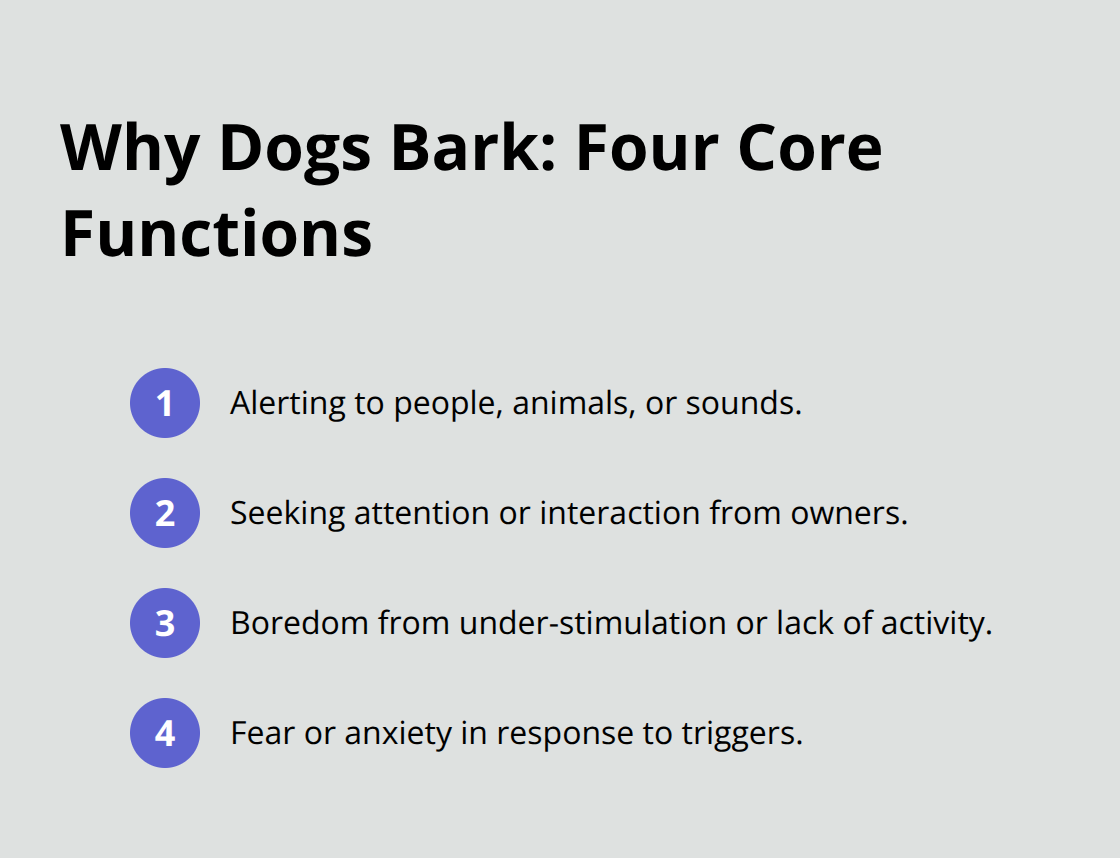
A canine barking on the window wants environmental administration and psychological enrichment, not punishment for noise.
Damaging Chewing and Separation Anxiousness
Damaging chewing serves a number of functions. Puppies discover their world via their mouths, whereas grownup canine chew to alleviate stress, fight boredom, or self-soothe. You must present acceptable chew toys, puzzle feeders, and rotate toys to maintain canine engaged. Separation anxiety creates harmful chewing patterns, typically accompanied by home soiling, pacing, and escape makes an attempt. The ASPCA recommends counterconditioning by pairing your exit with high-value objects like frozen peanut butter-filled toys or puzzle feeders.
Leaping and Anxious Behaviors
Leaping on folks and separation anxiousness regularly overlap with anxious canine that search reassurance via contact. These behaviors worsen with out structured administration and constant coaching. You must ignore leaping whereas rewarding calm greetings, since consideration of any form reinforces the leaping habits. This method works sooner than any corrective method.
Understanding what drives your canine’s habits units the stage for choosing the best coaching methodology. The methods you select matter way over the depth with which you apply them, and the following part reveals which approaches really produce lasting outcomes.
What Truly Works: Coaching Strategies That Stick
Reward-Primarily based Coaching Produces Superior Outcomes
Reward-based training produces measurably better outcomes than punishment-based approaches. Analysis constantly exhibits that canine educated with optimistic reinforcement develop fewer behavioral issues and show much less worry in comparison with these subjected to punishment or dominance-based strategies. The reason being simple: your canine learns what to do slightly than what to not do. If you reward calm habits throughout greetings, your canine understands that sitting quietly earns treats and a spotlight. If you punish leaping, your canine solely learns to worry the second somebody arrives on the door.
Clicker Coaching and Excessive-Worth Rewards
Clicker coaching, a type of optimistic reinforcement utilizing a secondary reward marker, helps canine perceive precisely which habits earned the reward. You click on the second your canine performs the specified motion, then instantly ship a deal with. This precision accelerates studying considerably in comparison with delayed rewards. Excessive-value rewards matter tremendously. A chunk of kibble fails to inspire a canine distracted by one other canine or a squirrel, however freeze-dried liver or cheese typically does. Rotate your rewards to stop habituation, and all the time use the highest-value merchandise when coaching round distractions or introducing new behaviors.
Consistency and Clear Coaching Standards
Consistency transforms coaching from irritating to efficient. In case you reward your canine for sitting generally however not others, your canine stops sitting reliably. The CCPDT certification customary requires trainers to keep up clear standards for what earns rewards, and this similar precept applies to your property. Everybody in your family should implement the identical guidelines utilizing similar cues. Inconsistent expectations undermine studying sooner than almost every other mistake house owners make. Your canine’s mind doesn’t distinguish between your leniency on Tuesday and strictness on Friday; it solely acknowledges unpredictable outcomes.

Constructing Behaviors By means of Gradual Development
Begin coaching in low-distraction environments the place your canine can succeed, then regularly improve issue because the habits turns into automated. Quick, frequent classes work higher than lengthy, sporadic ones as a result of canine retain info extra successfully via repetition spaced over time. This method builds robust foundations that switch to real-world conditions.
When Skilled Experience Turns into Important
When aggression, extreme anxiousness, or security considerations emerge, skilled intervention turns into non-negotiable. A board-certified veterinary behaviorist holds a DACVB credential and completes years of post-veterinary coaching earlier than certification. Licensed Utilized Animal Behaviorists maintain CAAB credentials requiring both a doctoral diploma with 5 years {of professional} expertise or a veterinary diploma with a residency plus three further years. Each can assess your canine’s particular points and design tailor-made plans, typically combining habits modification with medicines like fluoxetine or clomipramine when anxiousness or aggression warrants pharmaceutical assist. Normal trainers lack this scope and can’t prescribe remedy or diagnose underlying medical causes. The next move is dependent upon your canine’s particular situation-some points reply effectively to owner-led coaching, whereas others demand skilled evaluation earlier than you proceed.
The Hidden Causes Behind Drawback Behaviors
Most canine house owners skip an important step when tackling behavioral points: ruling out medical causes. A sudden change in habits typically indicators ache, thyroid dysfunction, or neurological issues slightly than a coaching failure. Your veterinarian should consider your canine earlier than you make investments time in coaching methods that received’t tackle an underlying sickness. Canines experiencing ache from ear infections, dental illness, or arthritis regularly show aggression, extreme barking, or harmful chewing as their solely solution to talk discomfort. The ASPCA emphasizes {that a} full veterinary workup prevents months of wasted effort on behavioral coaching when remedy or remedy would remedy the issue in weeks.
Train and Psychological Stimulation Drive Habits
Past medical points, train and psychological stimulation immediately decide whether or not your canine develops behavioral issues within the first place. Canines require each day bodily exercise tailor-made to their breed and age, and inadequate train ranks as the first driver of harmful habits, leaping, and extreme barking. Excessive-energy breeds like Border Collies require 1.5 to 2 hours of vigorous exercise each day, whereas low-energy breeds like Bulldogs could solely want half-hour.

The AKC recommends matching train depth to your canine’s breed traits: herding canine want jobs and psychological challenges, retrievers profit from swimming or fetch, and dealing breeds thrive with structured actions like agility coaching or dock diving.
Puzzle toys, sniff games, and rotating enrichment toys forestall boredom-driven destruction extra successfully than any correction method. These instruments occupy your canine’s thoughts and physique concurrently, addressing the foundation trigger slightly than treating signs. Strive introducing new toys weekly to keep up your canine’s curiosity and stop habituation to the identical objects.
Diet’s Influence on Habits
Diet issues equally to train when addressing behavioral issues. A weight loss plan missing important fatty acids, enough protein, or balanced micronutrients can intensify anxiousness and aggression, but few house owners join meals high quality to habits. Feed your canine high-quality protein sources, preserve constant meal schedules to cut back anxiousness round meals, and keep away from feeding desk scraps that create begging behaviors. Poor vitamin compounds stress responses and makes coaching considerably tougher.
Predictable Routines Calm Anxious Canines
A predictable each day routine calms anxious canine and prevents many behavioral issues earlier than they begin. Canines thrive on realizing when meals arrive, when walks occur, and when your departure is coming. This predictability permits your canine’s nervous system to calm down slightly than stay in fixed uncertainty. For canine with separation anxiousness, cover kibble round your property earlier than leaving, use puzzle feeders that occupy them for 20–half-hour, and apply departures with out really leaving so your canine stops anticipating abandonment. The ASPCA discovered that canine given frozen peanut butter-filled toys or long-lasting chews instantly earlier than their proprietor’s departure confirmed considerably diminished harmful habits.
Environmental Design Reduces Stress
Your house setting itself influences habits: extreme noise, chaotic schedules, and fixed exercise stress canine into reactive states. Set up a quiet area the place your canine can retreat, preserve constant feeding and potty occasions, and scale back environmental chaos that triggers anxiety-driven behaviors. A relaxed residence with clear boundaries and predictable patterns prevents many points from growing within the first place. Canines dwelling in structured environments with designated relaxation areas and constant schedules show fewer behavioral issues than these in unpredictable, high-stress households.
Last Ideas
Dealing with canine behavioral points efficiently requires persistence, consistency, and a willingness to deal with root causes slightly than signs. Medical issues, inadequate train, poor vitamin, and unpredictable routines create the muse for aggression, anxiousness, and harmful habits. Repair these fundamentals first, and lots of behavioral issues resolve with out formal coaching.
Reward-based coaching works as a result of it teaches your canine what to do as an alternative of what to not do. Your canine learns sooner once you mark appropriate habits with a clicker and comply with with high-value rewards. Consistency issues greater than intensity-everyone in your family should implement similar guidelines utilizing the identical cues, or your canine receives conflicting indicators that undermine studying.
When aggression, extreme anxiousness, or security considerations emerge, skilled assist turns into important slightly than non-obligatory. Board-certified veterinary behaviorists and Licensed Utilized Animal Behaviorists possess credentials and experience that common trainers lack. They’ll prescribe remedy when habits modification alone proves inadequate and design tailor-made remedy plans primarily based in your canine’s particular points. Your veterinarian can refer you to qualified professionals in your space who perceive how you can deal with canine behavioral points correctly.

Trending Merchandise